


Implications for UK’s social care sector as Supreme Court overturns Cheshire West case
By Mark Smith - Local Democracy Reporter 17th Jun 2026
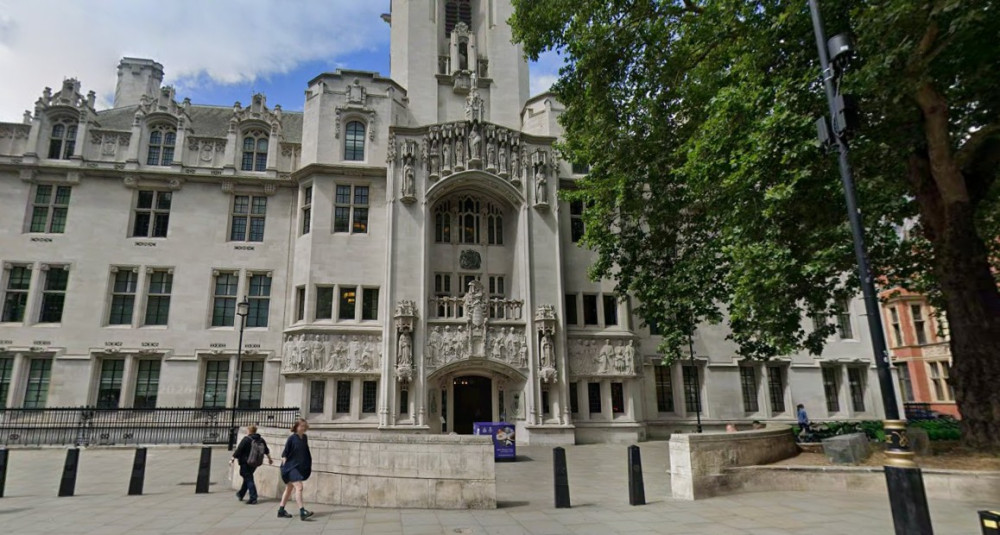


More than 12 years after it was made, the overruling of a landmark legal decision involving Cheshire West and Chester Council has upended the social care sector.
The Supreme Court recently overturned its own decision made back in 2014, redefining what constitutes a 'deprivation of liberty' for vulnerable people. The original case was brought on behalf of three people with learning disabilities.
At the time, the council argued that although the individuals lacked the capacity to make decisions and were living under restrictions, this did not constitute a legal deprivation of liberty.
Their reasons included the restrictions were in the individuals' best interests, and they were not actively objecting. But the judgement at the time enforced a more absolute definition of what constituted a deprivation of liberty.
This led to the establishment of a so-called 'acid test', which effectively ruled that a person is deprived of their liberty if they are under continuous supervision and control, and not free to leave their placement.
The President of the Supreme Court at the time, Lady Hale, stated: "A gilded cage is still a cage. Human rights are for everyone, not just for those who are fit and well, and able to look after themselves."
This had far-reaching ramifications for the vulnerable, their carers, and the wider sector – so much so that the single phrase 'Cheshire West and Chester 2014' became a phrase pretty much everyone in the care sector would have encountered.
For most people with no experience of the industry, it is almost impossible to overstate how much of an impact the decision had.
Download our Nub News App!
- It’s FREE and available now- Breaking news notifications
- Your Town in Your Pocket


But earlier this month, the Supreme Court overruled that original decision and upended the very definition of how a deprivation of liberty is defined.
It concluded that instead of relying on a single 'acid test', an assessment of whether someone is deprived of their liberty must now consider multiple factors. These include their specific situation, the type of restrictions they are subject to, and the person's own wishes.
Crucially, the court stated that lacking mental capacity does not automatically mean a person cannot give 'valid consent' to their care.
If they have a basic understanding and communicate that they are happy, they can legally consent, meaning the arrangement is not a deprivation of liberty.
In its judgement, the court said: "The imposition of the 'acid test' is wrong in law because it goes beyond the jurisprudence of the European Convention. A person's lack of objection is not legally irrelevant to the question of objective confinement."
However, the reversal has caused concern among sections of the care sector and various legal scholars.
What made the 2014 acid test so radical was that it essentially established a black-and-white, hard-and-fast absolute rule where context was removed from the equation. If a vulnerable resident lacked the capacity to sign their own care contract, was continuously monitored, and could not leave unescorted, the law deemed them 'confined'.
There was no legal mechanism to ask, 'do they actually mind?' or 'is this a happy home?'. It stripped away all professional discretion and replaced it with an unyielding mathematical formula.

Those in favour argued this was vital to protect vulnerable people, while opponents argued it was far too restrictive and bureaucratic.
The body which represents local authorities, the Local Government Association, welcomed the reversal.
It said: "This decision injects a much-needed dose of common sense back into social care. By overturning a rigid formula, we can finally stop wasting thousands of hours on bureaucratic assessments for residents who are content, allowing resources to flow back to frontline care where they are desperately needed."
But a joint statement by Mencap, Mind, and the National Autistic Society branded it the 'biggest roll-back of disability rights in a generation'.
It added: "This regressive legal standard devalues the dignity of disabled people and strips away vital independent checks on the safety and appropriateness of their care."
The decision has far-reaching ramifications for Cheshire West and every other council in the country.
First, it is expected to drastically clear out and reduce future council Deprivation of Liberty Safeguards (DoLS) backlogs. DoLS is the legal framework designed to protect vulnerable adults who lack the mental capacity to consent to their care arrangements and whose freedom is restricted.
There is now predicted to be a huge drop in new DoLS applications. This will save councils millions of pounds in administrative and legal fees, essentially because fewer everyday care arrangements will be legally classified as a deprivation of liberty.

Another major ramification is how quickly this new decision must be implemented.
Because the Supreme Court ruling comes into immediate effect, councils must re-write their adult safeguarding guidelines in real time, as well as rapidly retrain social workers and other frontline staff.
Finally, it brings an increased risk of litigation and systemic inconsistency. Because there is no longer a 'hard test' to guide them, professionals like social workers must now use their own clinical judgement to assess a person's individual feelings and wishes about their situation.
Download our Nub News App:
- It’s FREE and available now
- Breaking news notifications
- Your Town in Your Pocket
Share: