


Peak Cluster pipeline: boundary changes in Cheshire
By Dherran Titherington 23rd Sep 2026
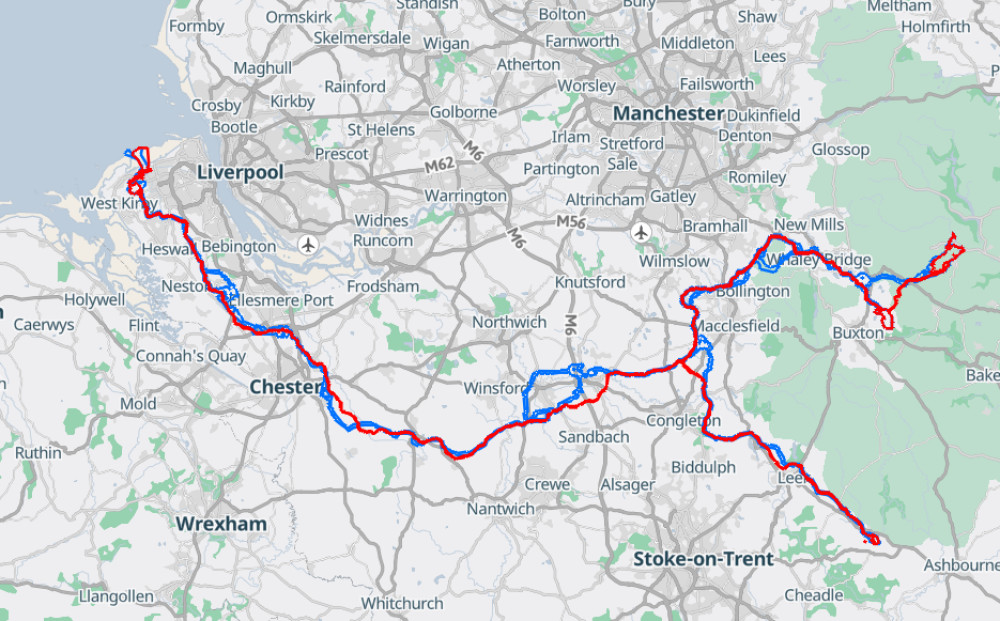


A major pipeline set to cut through Cheshire's landscape has seen its proposed boundaries redrawn ahead of a formal public review in the new year.
Peak Cluster is a proposed carbon capture and storage scheme which aims to transport carbon dioxide captured from four cement and lime producers in Derbyshire and Staffordshire.
The planned underground pipeline would run for around 120 to 125 miles through Derbyshire, Staffordshire, Cheshire and Wirral before carrying the captured carbon dioxide offshore for permanent storage beneath the Irish Sea.
Newly updated maps now show boundary adjustments across three key parts of Cheshire: north of Hargrave and Cotton Abbotts near Chester, southwest of Gawsworth, and southeast of Holmes Chapel.
Project organisers have adjusted about 15 percent of the overall pipeline route and narrowed the proposed construction corridor from 300 meters down to 100 meters wide in most areas. Significantly reducing the project's land footprint, the changes remove many previously affected properties from potential construction zones.
This adjustment follows technical surveys and feedback from earlier consultations to refine the pipeline's trajectory ahead of the next phase of public reviews.
A formal consultation focusing on pipeline infrastructure and access layouts across Cheshire, Derbyshire, and Staffordshire will launch this November, followed by a Wirral-specific review in January.
Because the project is classified as a Nationally Significant Infrastructure Project (NSIP), it bypasses standard local planning rules.
Download our Nub News App!
- It’s FREE and available now- Breaking news notifications
- Your Town in Your Pocket


Cheshire West and Chester Council does not have the power to approve or reject the scheme directly; instead, the final decision rests with the Secretary of State for Energy Security and Net Zero via a Development Consent Order.
However, these latest modifications follow considerable local political pushback.
In April, Cheshire West and Chester Council called an extraordinary meeting and voted near-unanimously to pass a cross-party motion formally opposing the pipeline.
In a letter sent to the Secretary of State, council leader Cllr Louise Gittins clarified the council's stance was "not a rejection of climate action".
While acknowledging the need to "reduce emissions at pace", the leader stated that climate solutions "must also be fair and achieve community buy-in", and must not "impose disproportionate harm" on communities that "do not directly benefit from their implementation".
Specifically, cross-party representatives raised ongoing concerns regarding the safety implications of transporting high-pressure CO₂ near residential areas, the lack of an independent safety framework, and the substantial disruption to Cheshire's green spaces and agricultural land.
Further objection came from Chester Zoo chief executive Jamie Christon, who described the proposed Peak Cluster pipeline's impact on the region's habitats as "unacceptable".
Last month, Christon told the BBC that the proposed route of the Peak Cluster carbon capture project could threaten the zoo's conservation work, saying it "would rip through our fields and jeopardise environmentally sensitive habitats", including "irreplaceable wetland habitats that support wildlife and store carbon".

While recognising the progress being made on low-carbon infrastructure, Christon said there was a distinction between necessary development and "bad development" which causes environmental damage to "irreplaceable habitats and ecosystems".
Download our Nub News App:
- It’s FREE and available now
- Breaking news notifications
- Your Town in Your Pocket
Share: