


Male bumblebees are more adaptable than females, University of Chester study finds
By Dherran Titherington 11th May 2026
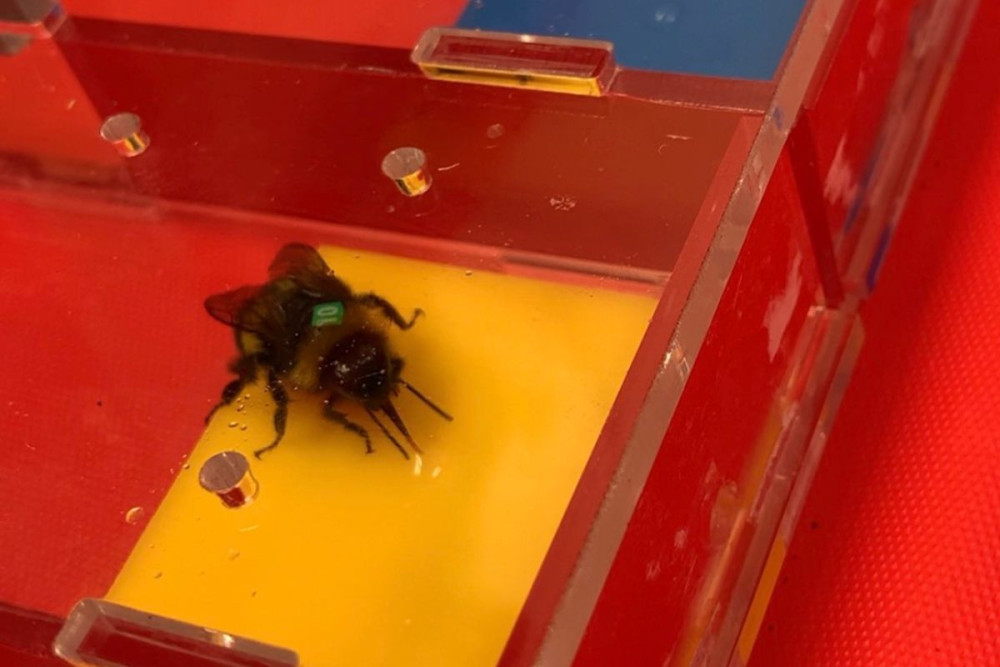


Male bumblebees are more active and adaptable than female bees, according to new research led by the University of Chester.
The study - carried out in collaboration with Toyota Motor Manufacturing UK, Newcastle University and University of Sheffield - examined how the different roles of female worker bees and male drones affect their behaviour and ability to adapt to new environments.
While previous research has often focused on female bees, the team wanted to better understand how male bumblebees behave and learn.
Researchers compared male and female buff-tailed bumblebees (Bombus terrestris) by testing how active they were in unfamiliar surroundings and how quickly they could learn to associate colours with a food reward.
The bees were placed in specially designed boxes divided into compartments, where they moved freely between sections. Scientists recorded how long the bees stayed active before introducing learning tasks involving blue and yellow artificial flowers linked to a sugary reward.
In the final stage of the experiment, the reward colour was switched to test how quickly the bees could adapt and relearn the task.
The study found that male bees were significantly more active in unfamiliar environments than females. Although both sexes learned the colour-reward association equally well, males adapted more quickly when the reward changed.
Dr Pizza Ka Yee Chow, who helped lead the study, said the findings reflected the different roles male and female bees play in nature.
Download our Nub News App!
- It’s FREE and available now- Breaking news notifications
- Your Town in Your Pocket


She said: "In bumblebees, female workers are the main foragers for the colony, whereas males (drones) have minimal responsibility. However, males become solitary foragers once they leave the colony.
"Males' active time may reflect their exploratory behaviour such as pre-mating patrolling, and their enhanced flexibility suggests their readiness to find new profitable flowers when exploited flowers decrease in quality.
"These results highlight the importance of these behavioural and cognitive traits for males, which may increase their chance of finding mates and improve their foraging efficiency.
"They indicate that increased activity level and behavioural flexibility are, therefore, crucial for their survival."
Dr Chow added that female bees' reluctance to abandon previously rewarding flowers could actually benefit the colony over time.
She also said the findings highlighted the need for more research into male bee cognition, which has historically received less attention than studies of females.
The research paper has been published in the journal Animal Cognition.
Download our Nub News App:
- It’s FREE and available now
- Breaking news notifications
- Your Town in Your Pocket
Share: