


Chester Zoo's latest amphibians named after iconic Alien films
By Dherran Titherington 2nd Feb 2026
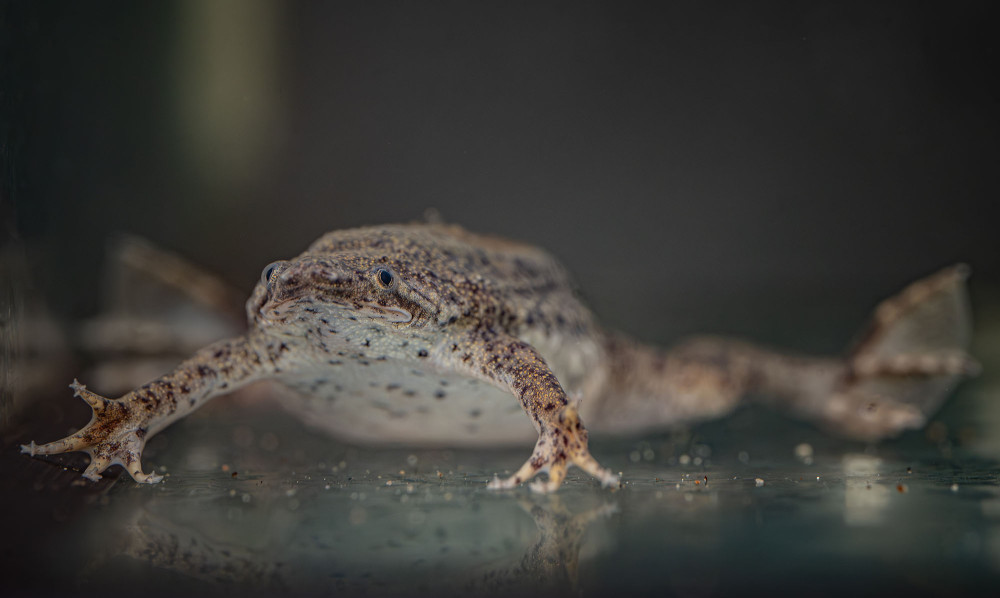


A type of aquatic toad that that carries its developing young beneath the skin has been bred at Chester Zoo for the first time.
Four new Surinam toads, named Ripley, Lambert, Ash and Dallas - after characters in the iconic Alien films - are the first to live at Chester Zoo.
Keepers say the names are a nod to the species' unusual breeding strategy, which looks surprisingly like scenes from the sci-fi horror series.
Native to South America and rarely seen in UK zoos, the toads are now living in a new specially created habitat in the zoo's Tropical Realm - one of its biggest indoor areas.
Surinam toads are famous for their distinctive reproductive process.
Unlike most frogs, which lay spawn in water and leave it to develop, Surinam toads use a very different method.
When the eggs are laid, the pair perform a backflip which flicks them onto the female's back. The male then presses the eggs into her skin.
Zoo keepers hope this part of the life cycle will capture the imaginations of visitors.
Download our Nub News App!
- It’s FREE and available now- Breaking news notifications
- Your Town in Your Pocket


Images of egg-carrying Pipa parva, and their cousins, Pipa pipa, often trigger curiosity online. They have been linked to trypophobia, with some viewers reacting with strong disgust or anxiety to seeing the clusters of eggs and holes in their skin.
However, much of the time, the toads should be fine to view at Chester Zoo, as the eggs are only visible for a short period.
Surinam toads spend their entire lives underwater and have flattened bodies that help them blend into leaf litter on riverbeds. They have also evolved star-shaped sensory structures on their fingers, which they use to detect movement and locate prey in muddy water.
Despite investing heavily in raising their young until hatching, the adults can pose a risk once the tadpoles emerge.
"They're extremely greedy and will eat almost anything that moves," said Adam Bland, assistant team manager for Amphibians at Chester Zoo.
"We remove the tadpoles quickly to give them the best possible chance of survival."
The species also communicates differently from most frogs. Rather than croaking, Surinam toads produce a soft clicking sound by moving small bones inside their bodies.
Mr Bland said working with unusual species such as the Surinam toad helps improve understanding of amphibian biology at a time when many species are declining worldwide.

"They aren't animals people expect to see," he added, "But that's exactly why they're so effective for helping people understand how amphibians live - and why we're trying to prevent their extinction."
Download our Nub News App:
- It’s FREE and available now
- Breaking news notifications
- Your Town in Your Pocket
Share: