

Chester Zoo study reveals hidden results of feeding hedgehogs
By Dherran Titherington 20th Jan 2026
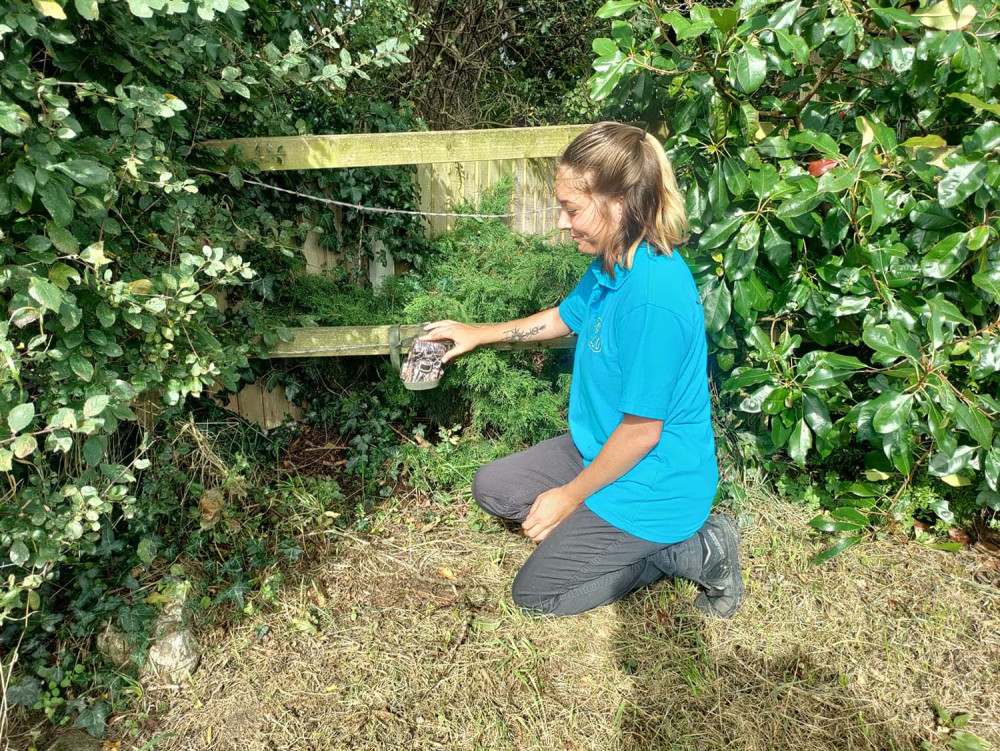


A large-scale motion sensor camera project has revealed the hidden results of feeding hedgehogs - and it may have a bigger impact than previously thought.
Researchers at Chester Zoo and Nottingham Trent University analysed thousands of images from 415 gardens, alongside each garden's specific characteristics, to examine how often hedgehogs were detected and which features most influenced their visits.
Hedgehogs were present in more than half (57%) of the gardens studied, demonstrating that these spaces are crucial habitats for them.
The study, in residential gardens across Cheshire, was part of Chester Zoo's Hedgehog Watch scheme and is thought to be one of the UK's largest trail camera studies for a single species.
Hedgehogs are a species of conservation concern across Europe, with long-term population declines due to factors such as loss of habitat and increased vehicle collisions.
The researchers believe urban habitats are increasingly important for hedgehogs and that unlocking insights into how they use gardens could play a key role in their conservation.
Food was by far the most important factor for their presence, with the spiky mammals appearing in 78% of gardens that supplied hedgehog food and 53% of gardens where bird food was left on the ground.
Hedgehog presence dropped to fewer than half of gardens (46%) when no food was left out. Just over a quarter (28%) of all the gardens surveyed contained food left out for hedgehogs.
Download our Nub News App!
- It’s FREE and available now- Breaking news notifications
- Your Town in Your Pocket


Lead researcher Kelly Hitchcock, a PhD student in Nottingham Trent University's School of Animal, Rural and Environmental Sciences, and one of Chester Zoo's Conservation Scholars, warned that the practice of feeding wildlife needs further study as it can lead to significant and unanticipated changes to animal behaviour and health.
She said: "The provision of supplementary food clearly plays a significant role in shaping hedgehog movement and distribution.
"Despite the possible benefits of supplementary feeding, it can pose potential risks such as increased disease transmission among animals, altered hibernation behaviour, increased aggression between species and changes in species community structure."
The study also revealed that hedgehogs were 70% more likely to be spotted in gardens where foxes had been detected, possibly due to increased food availability.
Kelly said: "We saw some of this on the cameras, which captured images of foxes and hedgehogs sharing food bowls, despite the fact that hedgehogs can be a prey species for foxes.
" The potential impacts of supplementary feeding certainly warrant further investigation in future research."
While the authors anticipated that the presence of food would be important, it was so dominant that it made other variables such as the presence of flower beds, vegetable patches, overgrown areas, or ponds, less significant within the data.
The researchers argue, however, that while their work sheds important light on how hedgehogs are using urban gardens, people should continue to include wildlife-friendly features on their land as hedgehogs and other species will benefit from them.

"Our data will contribute to further studies, including one looking at hedgehogs, foxes and badgers. There is more research needed, and public participation has huge potential to help us understand how UK wildlife and people coexist within a changing world," said Kelly.
Leah Williams, Lead Conservation Scientist in Population Biology at Chester Zoo, said: "This was a fascinating and ambitious project.
"It is generally difficult for scientists to access private gardens to gather camera trap footage. One of the largest camera trap studies of its kind in the UK, it yielded an incredible sample size and captured amazing snapshots of garden wildlife.
"It was a hugely collaborative project and would not have been possible without the volunteers who allowed cameras into their gardens.
"We know many were surprised to find that their gardens host hedgehogs, which are nocturnal, and we like to think this was a nice way for the participants to feel more connected to species living just beyond their doorstep."
The study is published in the journal Urban Ecosystems.
Download our Nub News App:
- It’s FREE and available now
- Breaking news notifications
- Your Town in Your Pocket
Share: