Rare one-horned rhino born at Chester Zoo
By Dherran Titherington 19th Nov 2026
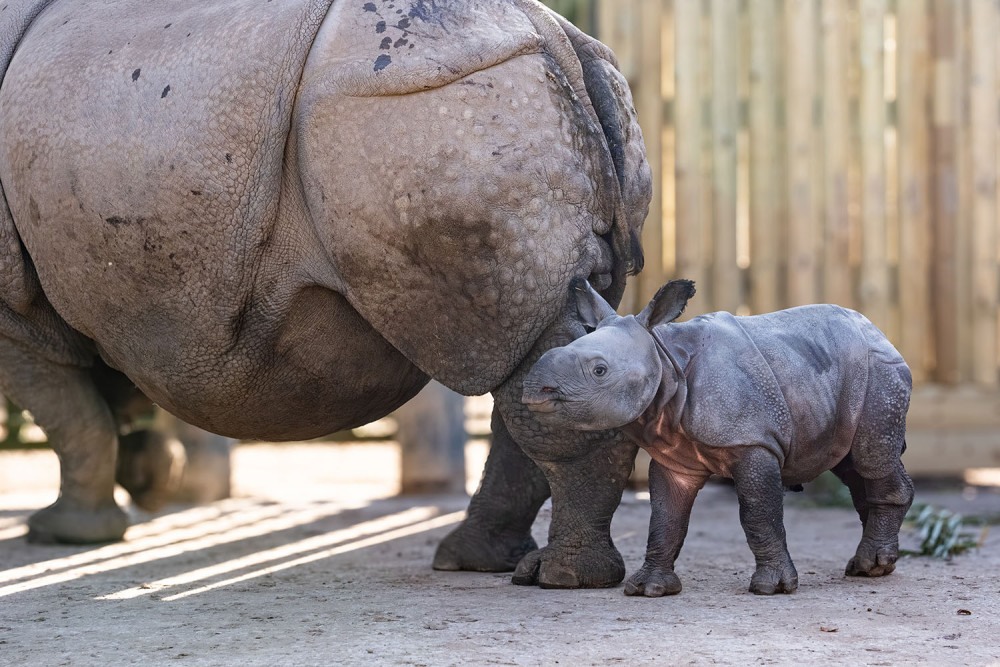


A rare greater one-horned rhino has been born at Chester Zoo.
Footage captured on CCTV cameras shows the moment rhino Asha gave birth following a 15-month pregnancy, with the calf then taking its first wobbly steps.
While the rhino calves weigh roughly 45kg at birth, about the size of a large adult dog, the largest adults can weigh more than 2 tonnes – as much as a car.
There are around 4,000 greater one-horned rhinos living in the wetlands, forests and grasslands of India and Nepal.
While the species has made a remarkable recovery thanks to conservation efforts, it remains vulnerable to extinction, with many animals concentrated in a relatively small number of protected areas.
The species was driven to near-extinction in the early 1900s by habitat loss and trophy hunting.
Both animals are in good health and remained indoors for the first few days of the youngster's life. They have now ventured out into a special behind-the-scenes paddock.
"Every birth is important for the future of this species and it's wonderful to see another healthy arrival," said Tom Garland, assistant manager of the rhino team at Chester Zoo.

The youngster is the fourth calf born to Asha and father Beni, who died earlier this year following a short and sudden illness.
Tom added: "Beni was a lovely rhino. He was calm and approachable, helped train animal care specialists and even took part in animal behaviour studies.
"It's lovely to know that his legacy lives on through this calf."
The calf is part of a Europe-wide conservation breeding programme that helps to maintain a healthy and genetically diverse population of greater one-horned rhinos in human care.
Emma Evison, Team Manager for rhinos, said the birth was a "big moment" for the team and conservation breeding programme.
She added: "Any birth can be risky, even for an experienced mum, but fortunately everything went smoothly.
"The calf was up and about within an hour and feeding shortly afterwards. Asha knows exactly what she's doing."
The zoo's scientists and keepers used a combination of experience and non-invasive testing to help plan the pregnancy.

Keepers closely monitored Asha's behaviour and regularly collected dung samples, which were analysed in the zoo's on-site science lab.
By testing hormone levels in the samples, scientists could track Asha's reproductive cycle and identify when she was most likely to be receptive to Beni. This helped keepers safely introduce the pair, while later analysis also helped confirm the pregnancy.
Mark Brayshaw, head of mammals at Chester Zoo, said that in addition to safeguarding the genetics of the species, Asha and her calf could help millions of zoo visitors understand the value of conservation.
He said: "Greater one-horned rhinos are much better protected in the wild than they once were, but many of them are concentrated within one national park in India, which makes them vulnerable to illness and environmental changes. They still need people to love and protect them.
"During his lifetime, Beni helped us spread the word about threats to rhinos and became an ambassador for his species. Asha is also an excellent ambassador, and we hope the calf will follow in their footsteps."
Download our Nub News App:
- It’s FREE and available now
- Breaking news notifications
- Your Town in Your Pocket


Share: