Critically endangered vultures named after Traitors stars arrive at Chester Zoo
By Dherran Titherington 22nd Oct 2026
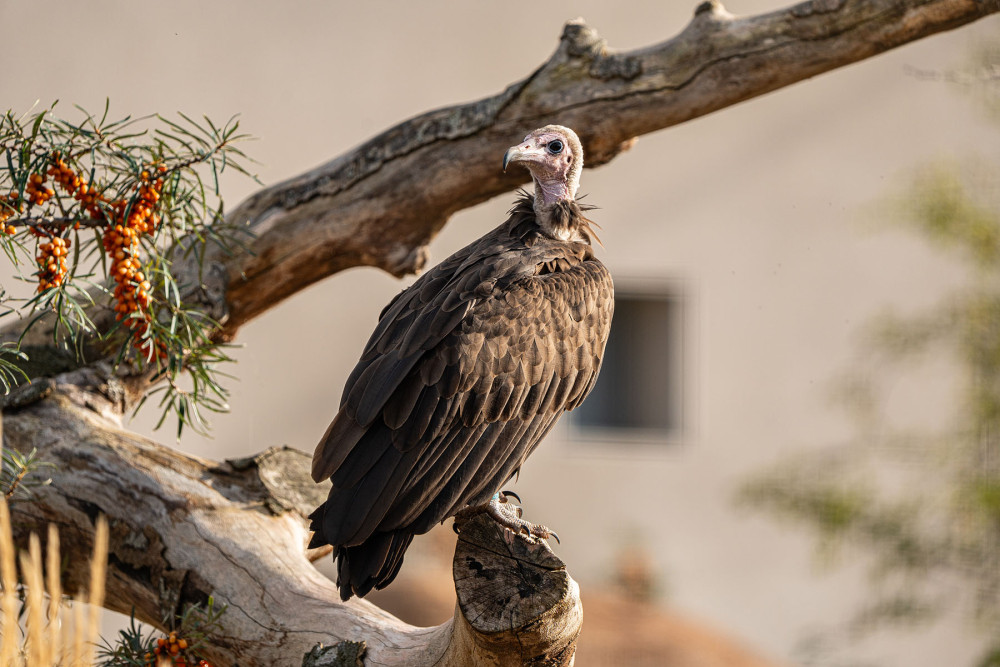


Two critically endangered vultures named after Traitors stars have arrived at Chester Zoo in a bid to safeguard the species from extinction.
The vultures, named after Claudia Winkleman and Alan Carr, are the first breeding pair of hooded vultures to ever live at Chester Zoo.
They arrive from the Horstmann Trust, a conservation breeding centre for vultures, and are part of a crucial Europe-wide project working to help give their species a future.
"Nobody prepared me for how much I would fall in love with them, their antics and characters," said bird keeper Heather-Anne Pedley.
"We named them after Traitors stars Alan Carr and Claudia Winkelmann because what better way to reflect how funny and engaging they are than to name them after two national treasures."
Heather added that hooded vulture couples are monogamous and will preen each other, gently touch each other's bills and co-build nests.
She said: "This pair are real love birds, and we are hopeful they'll go on to breed.
"Any youngsters they go on to have will become part of a European conservation breeding programme, helping to create an insurance population for this incredibly rare species.
Download our Nub News App!
- It’s FREE and available now- Breaking news notifications
- Your Town in Your Pocket


"They're fascinating birds, very active, clever and interested in their environment - and they don't wait their turn at feeding time."
Hooded vultures, which have wingspans of up to 180cm, traditionally had a wide range across west, central and southern Africa, where they soar over the land looking for carcasses to feed upon.
These birds, which have dark brown feathers on their body, a buff 'hood' and a distinctive bald face and throat, are known as 'nature's clean-up crew'.
In the wild, vultures help prevent zoonotic diseases - illnesses that can spread between species - because their stomach acid is so strong they can eat decaying meat that other animals would not be able to digest.
This helps prevent the spread of diseases like anthrax and botulism into the soil.
Despite their crucial role across different ecosystems, vulture numbers are dropping and hooded vultures are now classified as critically endangered according to the IUCN Red List of Endangered Species.
This decline is driven by accidental and deliberate poisoning and unsustainable demand for vulture body parts and eggs for use in traditional medicine and rituals. There is no scientific evidence to support this use.
Power lines and other tall structures also pose a threat, as vultures tend to scan the ground for food rather than looking straight ahead, leading to mid-air collisions. They can also be electrocuted if they land on uninsulated power lines.

Claudia and Alan's offspring will be part of a Europe-wide breeding programme designed to support an insurance population of hooded vultures, offering a lifeline for this environmentally crucial species
Download our Nub News App:
- It’s FREE and available now
- Breaking news notifications
- Your Town in Your Pocket
Share: