

Council voices concerns over major pipeline near contaminated site
By Ed Barnes - Local Democracy Reporter 24th Feb 2026
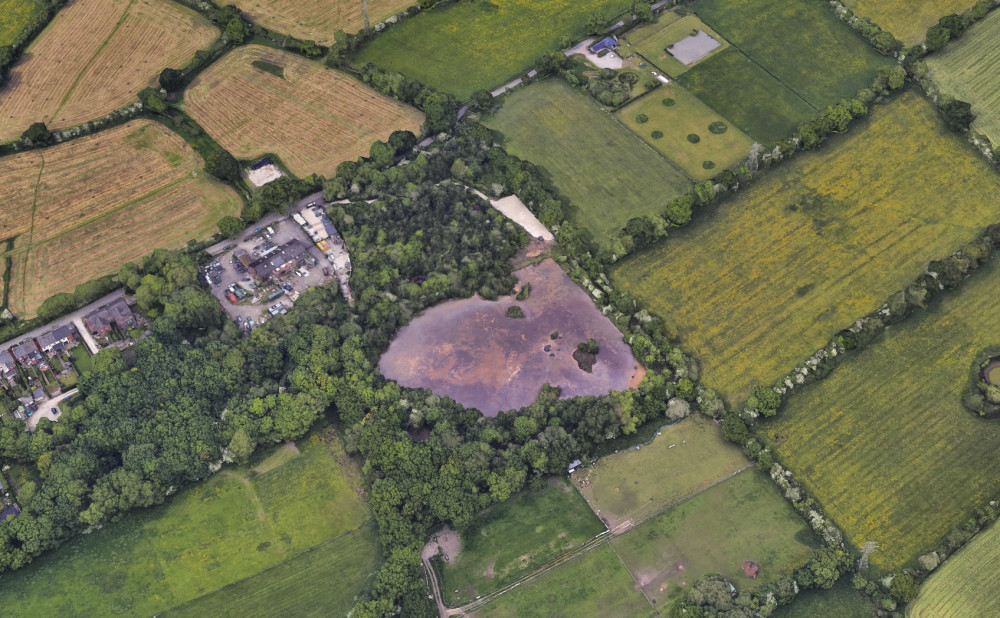


Concerns have been raised that a major pipeline could cause a 'significant' pollution accident if it is put next to a contaminated lake full of acidic waste.
Clean Rivers Trust says the lake's tar has the same acidity levels as stomach acid.
The concerns are one of many raised by councils about a pipe that could run from the Peak District to the Irish Sea, as part of a carbon capture storage project. This project, known as Peak Cluster, is aimed at tackling greenhouse gas emissions contributing towards climate change.
The project would take emissions from four cement and lime producers in the Peak District, transport it across Cheshire and Wirral, and store it underground in depleted Morecambe gas fields.
The scheme has been backed up with millions of pounds of government funding but still needs final government approval.
However, concerns have been raised about the project, with thousands speaking out, and Labour locally calling for an emergency Wirral Council meeting.
Peak Cluster are planning to release more information and engage with the public more to address people's concerns. As the project is a major infrastructure project, councils will not get a say in whether the project gets approved. However, they can raise issues with the Planning Inspectorate, the government body overseeing the project.
An initial response to Peak Cluster has now been published, which outlines what matters need to be addressed in any later application to address potential impacts on the environment.
Download our Nub News App!
- It’s FREE and available now- Breaking news notifications
- Your Town in Your Pocket


This report includes responses from multiple councils - including Wirral and Cheshire West and Chester Council - which is concerned about the possibility of a man-made accident, as the proposed pipe 'would be in close proximity to the Hoole Bank Tar Lagoon'.
This lake was contaminated with legally dumped acid tar waste in the past and sits 4km northeast of Chester.
According to the Clean Rivers Trust, the water in the lake has a pH of 1.5 to 2.5, making it about as acidic as vinegar or lemon juice. However, the tar seeping out of it has a pH as low as zero, the equivalent of battery or stomach acid.
The lake 'still contains significant volumes of industrial waste' and is currently being treated as part of an Environment Agency operation 'due to the severity of its contamination'.
Cheshire West and Chester Council said: "Given the proximity to the Hoole Bank Tar Lagoon and extent of any construction phases, as well as operation phases, any pollution accident should be scoped in, as the impacts relating to Hoole Bank Tar Lagoon would be significant."
As a result of the council's concerns, the Planning Inspectorate said it could not rule out 'an increased risk of leaks and spillages from hazardous materials associated with construction activities', and asked for more information from Peak Cluster in response to this.
Wirral Council officers have also raised a number of concerns. This includes top-quality farmland being affected, the impact on wildlife including protected toads, and the proposed location of a compression facility on the River Birket floodplain. The local authority said this facility is close to the new Hoyake Carrs wetlands project.
It is Wirral Council's belief reasonable alternatives may exist to the Wirral route, and the local authority 'is concerned that there is no transparency to this process as the alternatives have not been presented in the scoping report'. Peak Cluster has previously told the LDRS the Wirral route was the only feasible one, but the local authority now argues 'there is insufficient evidence and justification' to back this up.

The local authority said there had been no information given about the coastal facility, including an up to 50m high ventilation stack or what would be emitted from it.
The Planning Inspectorate also said there was no explanation about what will come out and asked for more information.
They added that more information will be needed to explain any need to blast rock during construction, including any assessments 'where significant effects are likely'. Flooding issues were also raised, including tidal flood risk and possible future risks due to rising sea levels.
The planning inspectorate said more information is also needed to rule out the potential for 'a significant loss of containment event' leading to 'a large-scale release' of carbon dioxide to happen during construction and any future decommissioning.
Download our Nub News App:
- It’s FREE and available now
- Breaking news notifications
- Your Town in Your Pocket
Share: